Hemang Badani Highlights Rise of Indian Coaches in Modern Cricket
The DC head coach since last season is Badani.
View: 14577
Published - 31 Mar 2026, 13:45 IST
Updated - 31 Mar 2026, 13:55 IST
19 Min Read

1.4K
0
Three of the ten head coaches in the 2026 Indian Premier League are Indian. Hemang Badani, one of them, has an impressive resume filled with head coaching honours from the ILT20 and the Tamil Nadu Premier League. In addition, he acted as batting coach for Sunrisers Eastern Cape during their SA20 victory in 2023 and as a batting consultant for three Lanka Premier League championship campaigns.
As he prepares for his second season as the Delhi Capitals’ manager, Hemang Badani will make his debut with Southern Brave, the Capitals’ sister team, in the Men’s Hundred later this year. This would be the first time an Indian head coach has worked in three different franchise tournaments worldwide.
While India hasn’t had an overseas coach in charge since the 2015 World Cup, Indian coaches are gradually expanding internationally in a variety of roles, especially with a significant IPL takeover across franchise tournaments worldwide. Is this the beginning of a new era for Indian coaches?
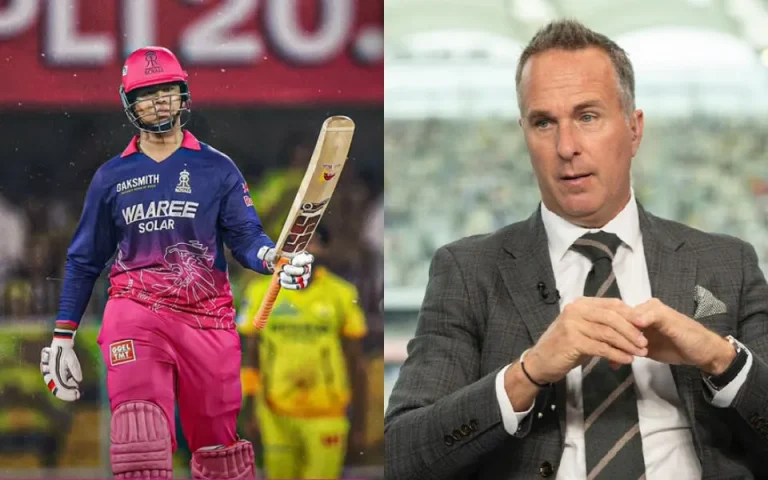
Before the 2026 Indian Premier League began, Hemang Badani spoke exclusively with Cricbuzz about what it’s like to be an Indian coach abroad, how to gain a player’s trust, and what the future holds for Indian professionals in coaching.
Hemang Badani, your experience as a coach has been exceptional.
Prior to your debut season with the Delhi Capitals, you experienced success abroad in the ILT20 with the Dubai Capitals. Was this the plan all along? How was the roadmap presented to you?
When I was coaching at the TNPL, a much lesser league, I believe the roadmap was actually put out for me in many respects before then. That, in my opinion, made it much easier for me to move up the ladder. I still think there’s a lot of work to be done. I still want to win the IPL trophy, and I’m determined to do so. However, TNPL was actually where I began coaching, and to be honest, it happened by accident.
You have to listen to the players a lot of the time. It’s not that coaching is one-dimensional or one-sided, with you being the one who speaks all the time. That is not how I believe coaching operates. In age-group cricket, where children are more responsive and require all of your advice and input, it might work to some extent.
However, as time goes on and you begin working with professional and semi-professional players who have played a lot of cricket, it’s also crucial to understand where they are, what they’re thinking, what they’re working on, and how I can add value instead of telling them that this is the only way to do something. That doesn’t seem to work at all.
Additionally, I believe that my strength lies in providing players with adequate transparency. It developed over time. I never imagined that my temperament would make me a good coach. I’ve always thought that I would be better off doing something else. However, it doesn’t always work that way, and sometimes it’s not that you design anything. And even though I hadn’t planned it and didn’t even think I could do it, I now think I enjoy it and think I do a respectable job.
Is speaking with an Indian coach significantly more comfortable for an Indian player?
There are excellent coaches out there. For many years, some of them have excelled in their coaching jobs while living abroad. However, I think that an Indian coach will be able to communicate with the player or, conversely, the player may communicate with the coach much more effectively since it’s a matter of knowing the culture and pulse. That’s enormous. We must have a thorough understanding of the player’s background and perspective.
I would literally know a player’s background from his under-12 or under-15 days, for example, if he was a domestic player or had represented India. I would have continued to learn more about him by doing my homework.
I can obtain sufficient knowledge about that guy more easily if I return to his state, his own players, and his older coaches. This facilitates communication with that gamer and helps me figure out what works and what doesn’t for him. I believe it has to do with spending more time in the setting than the others.
But is the reverse also true? Are cultural differences or communication barriers a problem abroad?
Your ability to communicate with them is more important. How soon do they grasp what we are attempting to do, and how are you able to win them over? Simultaneously, how quickly can I comprehend what they are considering, their advantages and disadvantages, their recent successes, and their most recent setback? How can I support him? How can I improve that person? At the same time, how can I simply keep up someone’s excellent batting and bowling without having to make many adjustments? As a coach, it’s crucial to acknowledge all of that.
When you meet up with a player again a year later, have you noticed any changes in his approach to the game? And if so, does that become a problem to solve?
As coaches, we have realised that a player of a given level will play in four or five leagues during the course of a year, which essentially means he will be coached by four or five different coaches. The player’s role clarity may fluctuate greatly depending on the setting.
Instead of saying, “You are my leader, I want you to take the game deep,” another coach would instruct him to bat differently by stating, “I want you to be a bit more aggressive.” Therefore, it also depends on each team’s organization and the skill sets of the players on that squad.
After a year, you will never have a player return to you and do exactly what he did for you the year before. And you tell him, “I am looking at the same role,” if you are considering a comparable position for the following year. It appears to me that your roles have evolved recently. However, I would like you to return to the same role we had last year. Alternatively, if I think the new role has better suited him, I may tell him, “You know what, I like what you are doing now.” Let me try to make it possible and see if I can assign you a comparable position on my team in the future.
The players have the responsibility, in my opinion. About five days before the event, I am unable to switch players or coaches. Additionally, the IPL is the only competition where you have more time to prepare for the season. There are practically five or six days in every other tournament. Therefore, you are not altering the method in any way.
All you are doing is clarifying their roles and advising them on how to maximise their potential. In accordance with their comfort levels, you are also communicating to them what is expected of them. Additionally, you are making sure they have all they need to be prepared for the game when they step onto the pitch.
Why do you believe it has taken so long for teams to consider additional Indian options? We’re beginning to see more Indian coaches take the helm and with success.
Sincerely, I attempt to search far and wide for the solution. It’s better, in my opinion, to consult some franchise owners about that. However, I do think that there are plenty of excellent Indian coaches who have emerged recently and are capable of performing well.
I acknowledge that there weren’t enough coaches in India in the early years. In India, there was insufficient support for retired athletes to become professional trainers. Rahul Dravid and Gautam Gambhir winning a World Cup, Ashish Nehra winning a Championship (IPL 2022) and leading his team to the final after winning a Championship, and Chandrakant Pandit winning the Championship the year before are all good examples of how things have evolved over time.
India used to have international coaches as well. However, if you look at it more recently, our board has deliberately shifted in favour of Indian coaches, and we’ve seen positive outcomes. There is sufficient proof that we Indian coaches are capable of doing our jobs, and it’s clear that people are starting to notice something about Indian coaches.
People are realising and appreciating our potential. We are now capable of being worldwide coaches, and we can be comparable to the foreign coaches who have had a significant influence on coaching throughout the years.
What does this indicate in terms of skill set for Indian coaches who are now rising through the ranks?
I believe it’s to have the humility to start over and realise that your cricket background has nothing to do with coaching. You can contribute your exposure and experience of your own lessons learned, errors made, and achievements to some extent. However, you must realise that you are not the focal point. You are merely a complementing part of the mechanism; you are not the masterpiece. It is your responsibility to set your ego aside and support your athletes.
It is your responsibility to enter the coaching structure without thinking of yourself as an Indian coach or an Indian athlete who has represented the country. That’s not going to work. You must put in as much effort as you can, even going so far as to assist any player who is on your side. There are requirements for each player. And it’s your responsibility to make sure that you treat them like your own children.
Is it possible that an Indian coach may soon take over as Australia’s or England’s top coach?
One of them, Sridharan Sriram, has been a part of the system for some time as a spin-bowling coach and consultant, although he hasn’t said much about it. Therefore, I don’t think the day is far off when an Indian coach should coach an overseas side if we have been successful enough to enter a setting where there haven’t been any foreign coaches for a while—or, to put it another way, Indian coaches for a while. It’s only a job for professionals.
It’s just as professional as Baz (Brendon McCullum) coaching England, Trevor Bayliss coaching England in the past, or even Daniel Vettori playing for the Australian national team. It’s not far, then. We have also had coaches from abroad. The planet and the market are global. It doesn’t matter where you are from as long as you are proficient in your vocation.
Nowadays, there is an increasing amount of room for recognition and a growing number of chances for trainers worldwide to present themselves. In the end, though, you must put in the effort. To begin with, you might be hired, but the industry is extremely competitive if you don’t provide results. You will be shown the entrance to a very difficult area.
Based on your experiences abroad, is there a barrier that an Indian coach must get beyond in order to integrate his views with what is needed there?
As a coach, you really cannot have the superstar culture. It doesn’t work to declare, “I can be a superstar coach,” if you were a superstar during your playing career. I say this for all coaches worldwide, and I believe the world’s top coaches will agree: it is your responsibility to enhance the athletes. It is your responsibility to strive to support them.
To put it simply, how modest would you be toward your child? I believe that you would absolutely do anything for your child. It is imperative that you make every effort to act in their best interests. As a coach, you must have that mindset regardless of where you are from—India, Australia, or many other countries.
Even if you coach teams under the same organization, what varies between leagues?
Building trust between the coach and the player is, in my opinion, the most crucial step. It becomes much simpler once you can accomplish that. One other factor is communication, which is crucial for a coach and for which I am fortunate to speak four or five languages. I can speak Tamil, which is really useful when working in India with folks from the south. I can converse with individuals from Gujarat because I am a Gujarati. For the purpose of managing the foreign players, I speak both Hindi and English.
Thus, dialogue is essential. Additionally, it becomes much simpler if you can have open and honest conversations with your players, regardless of where they are in the world. Therefore, it is crucial that you be able to break the ice and develop the player’s confidence and trust throughout the first five to ten days. That is essentially the essence of coaching and effective coaching.
However, how does coaching Tristan Stubbs in the SA20 differ from, say, teaching Axar Patel at the Delhi Capitals?
To be honest, not much. Building trust and ensuring that the player appreciates and comprehends you are crucial. and comprehends why you are giving him all of that information. It gets easier once he feels at ease and has the confidence to believe what you are saying. It’s possible that these athletes participate in so many leagues that they don’t trust what you’re saying, so they might come and go and do whatever they want. He doesn’t have to absorb everything, though, if they are certain that Hemang is providing them with accurate information and that what he is saying has substance.
However, if he can at least listen in and think about it, that at least helps us establish a connection and makes it simpler for us to talk. As a result, he will always be able to come back to me and say, “Coach, you said this, but I want to understand why.” Once he begins to do so, I will know that I have earned his trust. This essentially indicates that he has the self-assurance to approach me and engage in a constructive dialogue. After you’ve done that, you’ve practically entered his comfort zone, and he’s willing to hear what you have to say.
Do IPL teams currently have an evolution strategy for their coaches?
I’d assume that. In order to advance to the top position, the teams would consider hiring coaches. Additionally, consider having them do several positions in several leagues. What prevents you from hiring a coach in two or three locations if you feel at ease with him and think he’s doing a good job? Or much more if not.
Being able to work with that coach really makes things much easier for you. Additionally, he has prior experience working with the management, which makes dealing with them much easier. Thus, I do believe that will occur in the future.
In ten years, how do you envision the coaching scenario for an Indian professional aspiring to the top position?
We truly seem to be here to stay. Numerous Indians will be coaching in foreign leagues, and we shall witness their excellent work. Any foreign coach is now welcome to enter the market. When it came to the coaching staff, there was a tendency for individuals to favour South Africans, Englishmen, Australians, and New Zealanders. However, as you can see, there have been Indian and Sri Lankan coaches abroad in recent years.
Asians are become more prevalent in the international market. Since I was in India, a few national teams sought me to provide consultation services for the World Cup. However, I declined that opportunity just because I was aiming for the IPL and the Southern Brave. I just wanted to let you know that Indian coaches have a place too.

Get CricketMood News First
Add Us as Your Trusted Source
Download Our App
For a better experience: Download the CricketMood app from the ios and Google Play Store
Get every cricket updates! Follow Us:


1.4K Likes